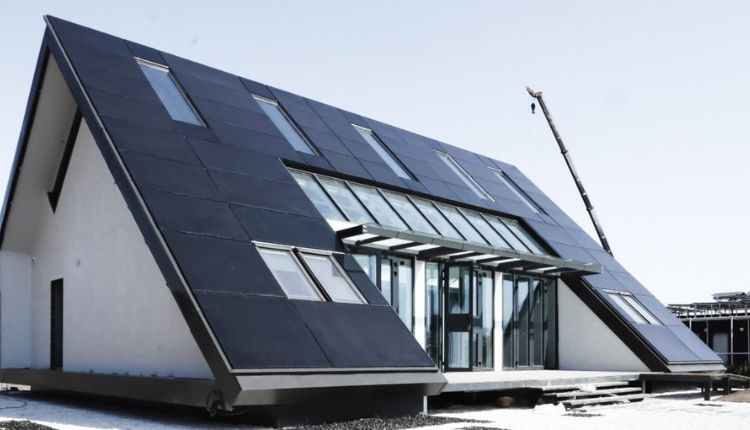
In a world where energy codes are tightening and design expectations are ever higher, glazing technology must advance or fall behind. HaanGlas Vacuum Insulating Glass (VIG) is more than a niche product—it’s rapidly becoming the next-generation standard in glazing. With strong certifications, striking performance data, and the ability to combine slim profiles with high thermal insulation, HaanGlas VIG offers what traditional double and even triple glazing cannot.
Certified Performance You Can Trust
One key milestone came in September 2022, when HaanGlas achieved SGCC (Safety Glazing Certification Council)certification. This recognized that their VIG products meet ANSI Z97.1 impact safety standards. Tempered VIG units passed impact tests, breaking into small fragments rather than sharp shards.
What does this mean in practice? Architects and building owners can use HaanGlas VIG on high-rise glass facades, curtain walls, or large window openings, where both safety and performance are non-negotiable. It removes one of the traditional obstacles—concern over glass shattering or impact hazards.
Ultra-Low U-Values, Slim Profiles
Thermal performance is at the heart of modern glazing demands. HaanGlas VIG offers U-values as low as ≈0.45–0.50 W/m²·K in several product lines, significantly below most double glazing and in many cases matching or outperforming conventional triple glazing in thicker builds.
In one recent oversize panel project, for example, HaanGlas produced a tempered VIG panel sized 1600 × 3000 mm with a configuration of 6 mm Low-E glass + 0.3 mm vacuum space + 6 mm tempered glass, achieving around 0.58 W/m²·K while maintaining high light transmittance (~80 %) and high visual clarity. This kind of performance in large panels is rare, showing that VIG can work not just in small windows but in big facades.
Slim, Safe & Versatile
What sets HaanGlas VIG apart is its ability to combine slim thickness with safety and durability. Key points include:
Fully tempered glass to ensure safe breakage patterns.
Low-temperature metal edge sealing, which avoids glass anneal and preserves strength and durability.
No evacuation holes in many designs, improving aesthetics and performance.
These features allow HaanGlas VIG to be used in historic building renovations, slim-frame modern architecture, and in climates where weight, thickness, or facade redesign are not options.
Road to Net-Zero, Retrofitting & Long-Term Value
As the world moves toward stricter carbon targets, glazing plays a huge role. HaanGlas has publicly stated goals of supplying 10,000 m² in 2023 and aiming for 50,000 m² in 2025 of VIG products, reflecting strong adoption momentum.
Retrofitting existing window frames with VIG rather than replacing full frames or fitting thick triple glazing can deliver:
Lower heating & cooling energy use
Faster payback (especially in cold or mixed climates)
Less disruption to building aesthetics and structure
Why Now Is the Time
Resistance to vacuum glass is slowly fading. With certifications like SGCC (impact/safety) in place, performance metrics proven in large-panel tests, and demand driven by energy codes and climate goals, VIG is no longer experimental—it’s becoming mainstream.
When you specify glazing for new builds, retrofits, or heritage restorations, VIG is the technology that checks more boxes: safety, slim design, energy savings, environmental impact, occupant comfort, and future code compliance.
